
Not work life balance - work life satisfaction
The one constant in schools today is change! Ultimately our response to change and how successfully we implement it are dependent on our attitude. In this session Steve Francis helps staff to develop a positive, optimistic and energetic attitude. We identify the three biggest obstacles to successful change and the specific strategies needed to overcome these challenges.
Increasing WORK-LIFE Satisfaction in Schools
Working in schools can be challenging. A happy staff achieves better results. It is vital that staff in schools get satisfaction from the important work we do. Reducing teacher stress and burnout are vital! This IS your REAL life – it isn’t a dress rehearsal.
7 Strategies for Motivating and Engaging Students
Many students have short attention spans, are disinterested and disengaged from learning. Teaching is more demanding than ever before! Traditional carrot and stick approaches have limited effect. Motivating and engaging students can be challenging. In this session Steve Francis reminds teachers of the 7 strategies they must implement to motivate and engage their students.
Schools Are People Places – Building Trust is Essential
Trust is at the heart of all relationships. Trust impacts on the quality of every relationship, every communication and every situation we face in schools. Building Trust is vital! Covey’s 13 behaviours that build trust are simple, straight forward and immediately transferable to schools. Having good intentions is not enough. It is behaviour that counts!
Effective Teamwork in Schools
There are 10 vital attributes that are necessary in all teams within schools. Teamwork is essential and must be aligned with the school’s direction and priorities. The better that people work together and are aligned, the better outcomes the school will achieve. Which of the attributes do your teams do well and which ones need to be improved? Establish clear and agreed priorities, in simple language.
Feedback – Helping Teachers Be the Best They Can Be
What teachers do in the classroom is where the ‘rubber meets the road’. 99% of teachers want to do a great job but receive very little feedback. Feedback to teachers is a key strategy for improved performance in schools. However giving teacher’s feedback is not part of the culture in most schools.
https://www.happyschool.com.au/
Interview - Dr Paul Brown with Dr Jordan Nguyen
https://www.youtube.com/watch?v=xJY4zywLh0E
Iain Taylor - Manuwera Intermediate School
Check out their website, especially the pastoral links
https://www.manurewaint.school.nz/772/easy_pages/6-all-the-time-every-time-all-of-us-everywhere
Gilbert Enoka - High Performing Teams
The power of a kind word.
1. What are some of your opinions of yourself that are not serving you well
2. Decisions - choices are the pathways to chances
3. You become unstoppable if you work on the things that people can't take away from me ie character and mindset.
Know Me - know myself
Be Me - be authentic
Stay Me - stay strong to what I stand for
Good leaders manage the wobble with individuals - which threaten the strategy.
Vent about your joy! Not just your problems
Timeless Principles
1. The magic is in the mahi
2. Culture beats strategy
3. Be where your feet are - 100 percent present
Have a:
Wish Bone
Back Bone
Funny Bone
We trumps me.
No one is more important that everyone.
Hold people accountable for their actions, not their intentions.
The standard you walk past is the standard you accept.
The culture that is set is the lowest standard that the leader tolerates.
Structure your day intentionally so you can fill your tank.
We are only interested in great, not good.
Opportunity whispers, is doesn't shout.
When the leader is better, everyone improves.
Comfort ages you. Adversity grows you.
People you lead only experience your impact, not your intentions.
People will follow your soul, not your goal.
When you change the way you look at things, the things you look at things change.
Be at your BEST when it is required.
Often the difference between those who succeed and those who do not is the habits they form. This is how we hit peak performance – forming good habits and breaking bad ones.
All Blacks mental skills coach, Gilbert Enoka, talks about this in relating his experience of coaching rugby players. There’s a combination of mindset and skillset he says is crucial for success, but there’s also a third, equally important point: structure. Together, mindset, skillset and structure make up Enoka’s success triangle.
He’s witnessed players who have the necessary skills and mindset still fail to make the team because of a lack of structure. If they can’t adhere to the necessary routine of training, early nights, meal plans and habits, they will inevitably not succeed.
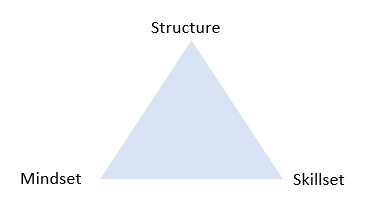
Of course, the fact that habits are so important is easier said than done. Often it’s not our lack of knowledge that’s the problem but how we implement the knowledge we do have, especially on a regular basis. Success requires structure, in the form of a succession of positive habits.
Comments
Post a Comment